
Why This Question Comes Up So Often
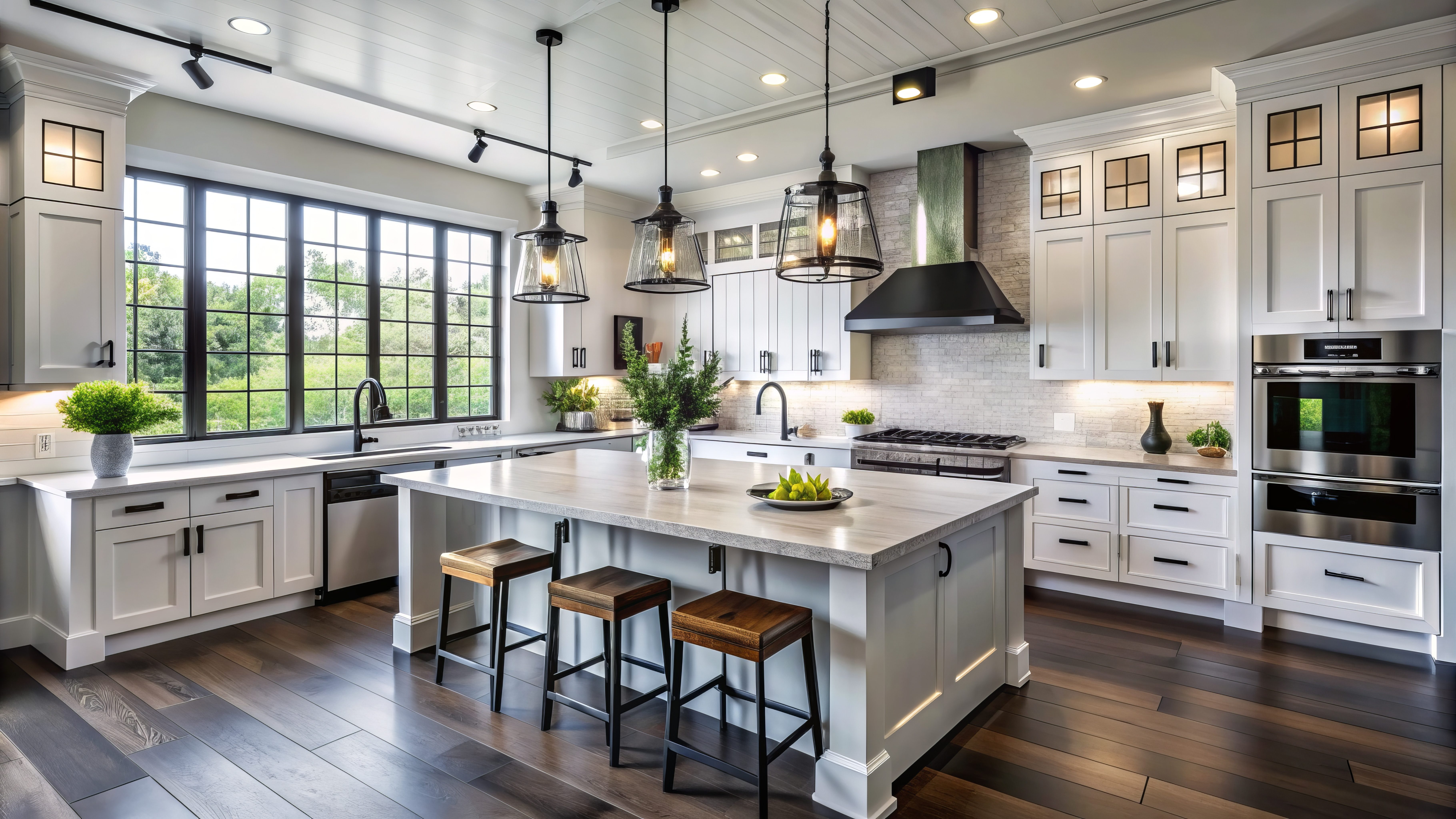
Most kitchens end up with mismatched light without anyone deciding it that way. A homeowner replaces one burned out bulb with whatever is on the shelf at the hardware store, and suddenly the pendant over the island glows amber while the recessed cans overhead throw a bluish white. It reads as unfinished even when every other part of the kitchen is done.
The mismatch happens because color temperature, measured in kelvins, is not something most people think about until it is staring back at them. A 2700K bulb and a 4000K bulb next to each other do not blend, they compete. That is the actual source of the "something feels off" complaint we hear from homeowners more than almost anything else.
When Mixing Actually Works
Mixing is not the problem, mixing without intent is. Designers do it constantly, pairing a warmer tone over a dining or island area with a slightly cooler tone over a sink or stove where task visibility matters more than ambiance. The key is treating it as a deliberate zone by zone choice rather than whatever bulb happened to be in the box.
A common approach is keeping ambient and task lighting, like recessed cans and under-cabinet strips, in the same family around 3000K, while allowing a decorative pendant or accent fixture to run slightly warmer if it sits in its own visual zone. Done this way, the eye reads it as layered rather than mismatched.
Where It Falls Apart
The failure point is almost always adjacent fixtures on the same visual plane. Two pendants over one island running different temperatures, or recessed cans in the same run of ceiling mixing 2700K and 5000K, creates a visual clash that no amount of styling around it will fix. The eye catches the inconsistency before it processes anything else in the room.
This is also where LED specifically causes more visible problems than older incandescent or halogen ever did. Incandescent bulbs varied so little in temperature that mismatches were barely noticeable. LED technology spans a much wider range, from soft amber to daylight blue, which means an unplanned mix is far more obvious now than it would have been fifteen years ago.
A Simple Way to Check Your Kitchen
Look at your kitchen after dark with every light on. If your eye is drawn to one specific fixture rather than taking in the room as a whole, that fixture is likely the mismatch. Checking the kelvin rating printed on the bulb packaging or base is the fastest way to confirm it, since most fixtures do not come labeled once installed.
If you are planning new fixtures rather than troubleshooting existing ones, deciding on a temperature plan by zone before you buy anything saves a return trip to the store later. It is a five minute decision that prevents a much longer fix.
Get a Lighting Plan That Actually Works Together
Fixing a mismatched kitchen or planning a new one from scratch both come down to the same thing, having a clear plan for where each temperature goes before the fixtures go in. Atlantic Designs works with homeowners across Bangor, Ellsworth, Lincoln, Newport, and Camden, ME to plan lighting layouts that read as intentional instead of accidental, whether that means recessed cans, under-cabinet strips, or a statement pendant over the island.
Visit us at Holden, ME to see warm and cool toned fixtures side by side and get a feel for how they read in person before you commit. Our team can also walk through your existing kitchen's lighting with you if something already feels off and you are not sure why.
Ready to get your kitchen's lighting working together instead of against itself? Contact us to set up a consultation, or browse our current lighting selection to start comparing fixtures.


