
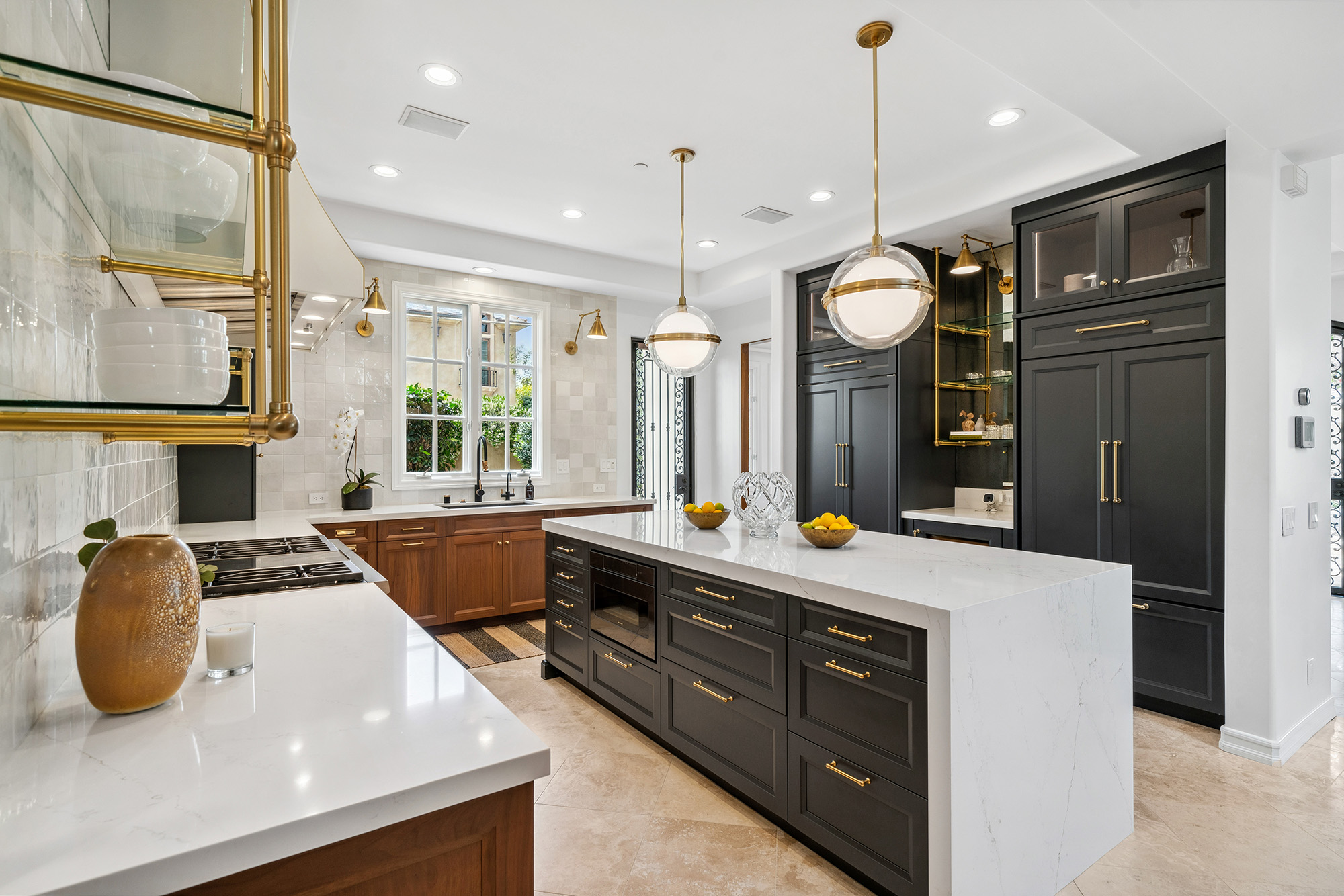
What Happens Without Interior Light
An unlit glass front cabinet reads as a dark rectangle in the upper run, especially against pale cabinetry. The contents disappear into shadow because the only light reaching them comes from the room, arriving at a steep angle through the glass and mostly bouncing off the surface rather than passing through. From a few feet back, you see reflection rather than what is inside.
This effect is stronger with certain glass types. Clear glass shows the contents reasonably well in a bright room. Reeded, fluted, seeded, or frosted glass diffuses whatever light hits it, which is exactly the point aesthetically, but it also means an unlit cabinet behind textured glass reads as a soft grey panel rather than a display. That is not a flaw, plenty of kitchens use textured glass specifically because it hides clutter. It just changes what you get out of the cabinet.
The Case for Lighting Them and the Case Against
Interior lighting turns a glass front cabinet into the visual anchor of the upper run. It gives depth to a wall that otherwise reads flat, and in a Maine kitchen where the room goes dark by mid afternoon for a good stretch of the year, it adds a warm secondary light source that works when you do not want the full overhead layer on. That evening glow is a large part of why people fit it.
The case against is simpler than people expect. If you are storing everyday dishes rather than anything you want on display, lighting the cabinet draws attention to contents that were never meant to be looked at. Some homeowners genuinely prefer the quiet of unlit glass, particularly with textured glazing. There is no right answer here, only whether the cabinet is a display or storage, and it is worth deciding that before wiring rather than after.
Where the Light Actually Needs to Sit
If you do light them, placement changes the result more than the fixture does. A strip mounted at the front top edge of the cabinet, just behind the face frame, washes light down across the front of the shelves and lights the contents from the side you actually view them from. A strip at the back lights the cabinet's rear wall and leaves the items themselves in silhouette, which looks striking with glassware and poor with ceramics.
Shelf material matters here too. Glass shelves let light travel down through multiple levels from a single top mounted strip, which is why lit display cabinets so often have glass shelving. Solid wood shelves block that path entirely, so each shelf needs its own light source if you want the whole cabinet lit evenly. Neither setup is better, they just need different planning, and wood shelves with a single top light will always look brightest at the top.
Planning It Before the Cabinets Are Built
Interior cabinet lighting is far simpler to run during cabinetry installation than it is afterwards, since the wiring path can be built into the cabinet back or side panels rather than surface mounted later. This is the single most practical reason to decide early even if you are unsure about the look.
If you already have glass front cabinets and are adding light after the fact, battery or plug in options exist and can work well, particularly in a cabinet that sits near an outlet. They give you a way to test whether you actually like the effect before committing to anything hardwired.
The difference between a lit and unlit glass front cabinet is hard to picture from a photo and obvious the moment you see both side by side. Atlantic Designs works with homeowners across Bangor, Ellsworth, Lincoln, Newport, and Camden, ME on cabinetry and lighting together, which means we can plan the wiring path and the fixture choice at the same time rather than retrofitting one around the other.
Visit Holden, ME to see glass types, shelf materials, and interior lighting in person, and talk through whether your cabinets are better suited as a display or as quiet storage. Our designers can walk you through both directions without pushing you toward either.
Thinking about glass front cabinets for your kitchen? Contact us to plan it out, or browse our lighting selection to see interior and accent options.


