
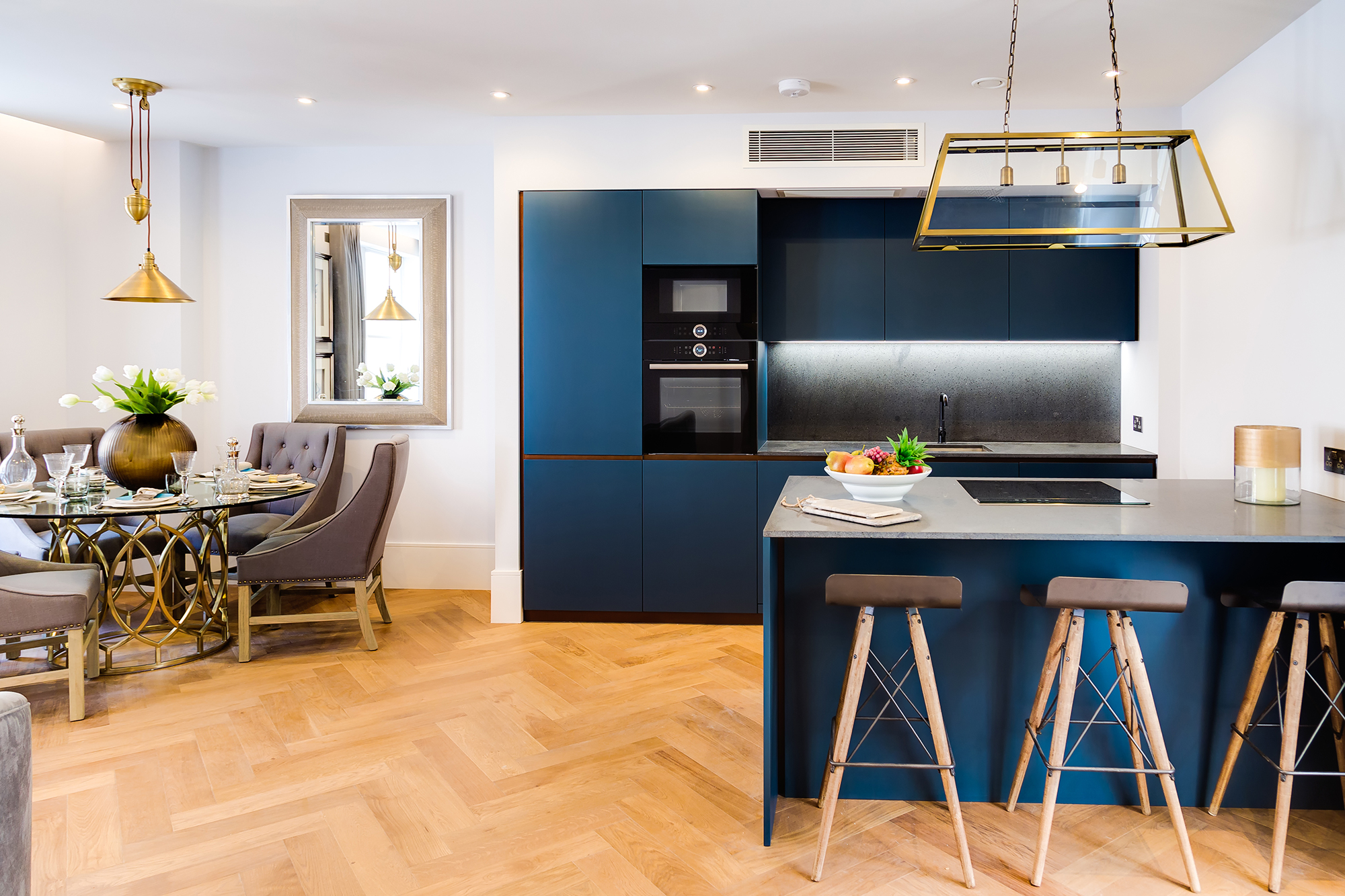
Small spaces don’t need more lights. They need smarter light. The difference between “tiny and cluttered” versus “bright, calm, and upscale” is usually a technical mix of beam control, glare management, and where the light is aimed. At The Kitchen People in Holden, ME, we help homeowners near Ellsworth solve the classic small-home lighting pain points: dark corners, low ceilings, harsh glare, and that “it’s bright but still feels cramped” problem.
Trick 1: Design for lux targets, not vibes
If you want a space to feel premium, it should feel effortlessly usable. That starts with adequate illuminance (lux) in the right places.
Practical targets:
Kitchen counters (task): ~300 to 500 lux on the work surface
Dining table: ~150 to 300 lux (dimmable is ideal)
Hallways and circulation: ~50 to 150 lux
Vanity/face lighting: even vertical light, not just overhead brightness
This is why one bright ceiling fixture rarely works. It raises overall brightness but fails at vertical surfaces and task zones, leaving the room feeling flat.
Trick 2: Prioritize vertical light to “grow” the room
The eye reads brightness on walls more than brightness on floors. In small rooms, “expensive” often means brighter walls and softer ceilings, not a spotlight blasting down.
How to do it:
Use wall washing (fixtures aimed to distribute light evenly down a wall).
Add sconces or indirect lighting that brightens vertical surfaces.
Place mirrors strategically, but light them properly so they reflect soft, even illumination rather than a glaring bulb.
Trick 3: Control glare like a designer, not a hardware aisle
Glare is the fastest way to make a room feel cheap, even if you spent a lot. In small spaces, your eyes are closer to fixtures, so glare control becomes critical.
Look for:
Shielding/cutoff: The light source should be recessed or diffused so you don’t see a painfully bright point.
Diffusion for under-cabinet: Use channels and lenses that eliminate “dotting.”
Avoid clear glass when the bulb is visible: Clear glass can be pretty, but in tight rooms it often creates harsh sparkle and discomfort.
Trick 4: Pick beam angles that remove “hot spots”
Hot spots make small rooms feel uneven and visually busy. Wider, more uniform distribution looks calmer and more intentional.
Rules of thumb:
Narrow beams are better for art accents, not general lighting.
In kitchens, combine a soft ambient layer with clean task lighting so you don’t need aggressive downlights.
If you have glossy surfaces (quartz, shiny tile, stainless), beam control matters even more because specular reflections can feel like visual noise.
Trick 5: Color quality is the “quiet luxury” of lighting
Small rooms amplify color problems. Low-quality LEDs can make whites look dingy and wood look dull.
Specs to look for:
2700K to 3000K for most residential small spaces (warm and flattering)
High color rendering with strong reds (good skin tones and wood warmth)
Consistency across fixtures so rooms don’t shift from warm to cold as you move through the home
If you want the room to feel cozy at night but crisp during the day, warm-dim is a high-impact upgrade because it mimics the comfort of incandescent while keeping modern efficiency.
Trick 6: Use toe-kick and low-level lighting to reduce clutter stress
In small kitchens, bright overhead light can exaggerate clutter and texture. A subtle low-level glow changes the mood and improves navigation at night.
Toe-kick lighting adds gentle guidance without turning on “the sun.”
Low-level light is also a safety and comfort win for late-night snacks and early mornings.
Trick 7: Dimming that actually works
A “premium” feel requires control. But many LED dimming setups fail because the dimmer and driver don’t match.
Checklist:
Confirm compatibility between the fixture’s driver and your dimmer type (ELV vs TRIAC)
Choose products with stable low-end performance (so the light doesn’t flicker or drop out)
Use multiple zones: you’ll get better comfort with fewer lights on lower levels rather than one circuit blazing
Trick 8: Let finishes do some of the work
Light and material are a team. In small spaces:
Matte finishes can reduce glare and visual chaos
Light-colored walls with higher reflectance help the room feel larger
Strategic contrast (not high contrast everywhere) creates a composed look
Premium lighting in a small home is rarely about buying the most dramatic fixtures. It’s about comfort engineering: even walls, controlled glare, good color, and light placed where life happens.
If you’re upgrading a compact kitchen or living space, visit The Kitchen People in Holden, ME to build a lighting plan that feels bigger, calmer, and more polished. We serve Bangor, Ellsworth, Lincoln, Newport, and Camden, ME. Contact us or stop in to review fixture options, layouts, and lighting specs that make small spaces feel intentionally designed.


