
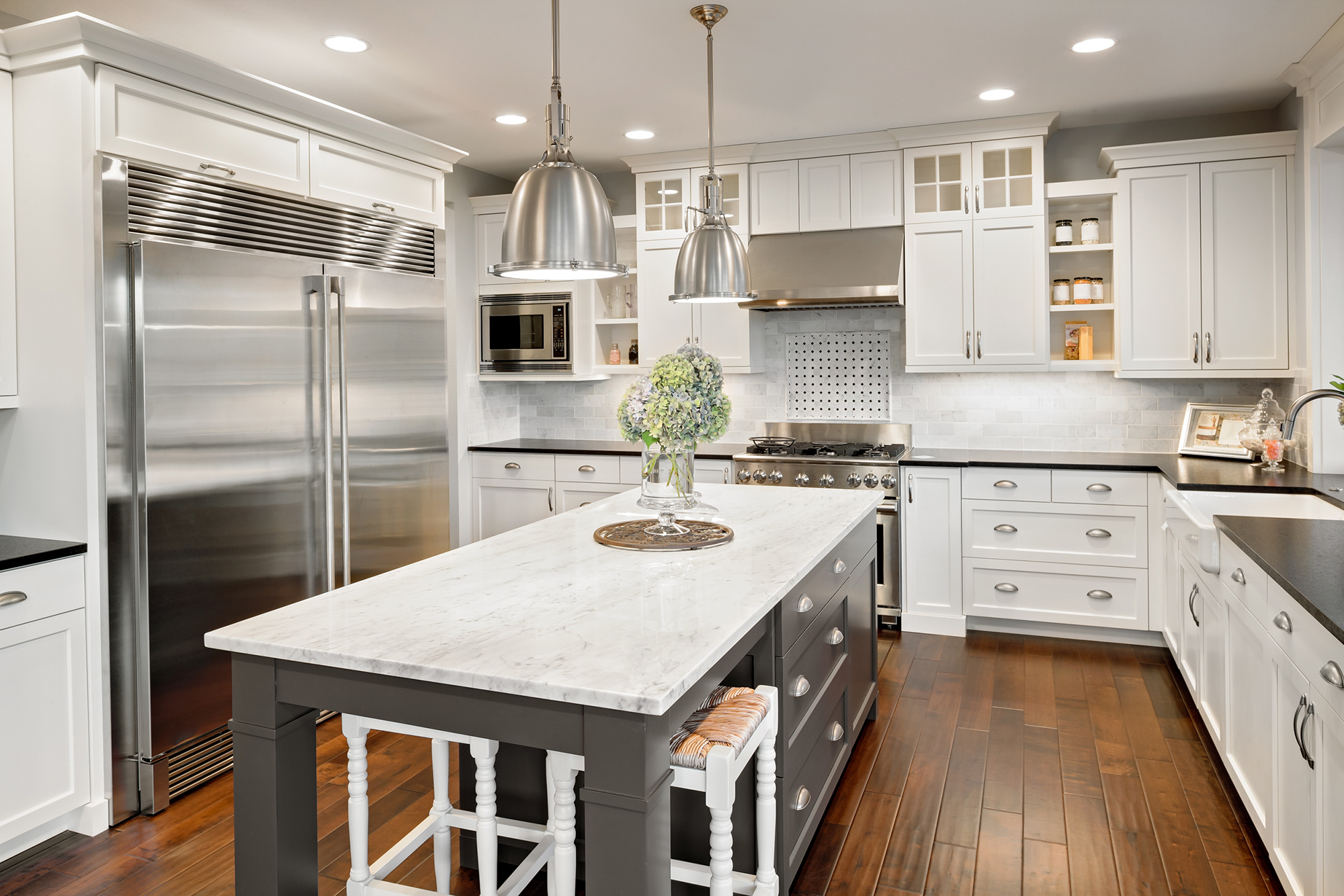
Tile and LVP (luxury vinyl plank) can both look amazing in a kitchen. But the best choice depends less on Pinterest and more on what stresses your floor will face: cold mornings, wet boots, grit, pets, kids, rolling chairs, and the occasional dropped mug.
Here’s the honest technical frame:
Tile is rigid. It hates movement and poor prep, but it loves water.
LVP is resilient. It’s forgiving underfoot, but it demands flatness, correct expansion space, and good seam integrity to stay problem-free.
If you pick the right product and install system, either can be a “forever floor.” If you don’t, kitchens expose mistakes fast.
1) Subfloor requirements: tile wants stiffness, LVP wants flatness
Tile: structure and deflection matter
Tile and grout crack when the floor system flexes. It’s not just the surface, it’s the whole assembly (joists, subfloor, underlayment). Installers often reference deflection standards like L/360 for ceramic and L/720 for stone (a stiffer requirement). The point is simple: if the floor bounces, tile punishes you.
Tile failure patterns in kitchens:
cracked grout lines in high traffic zones
“hollow” tiles (poor thinset coverage)
lippage (uneven edges) that catches feet and looks sloppy
LVP: flatness is the make-or-break
Click-lock LVP needs a flat substrate. Not “level,” flat. If the subfloor has waves or peaks, joints stress, locks fail, and you get:
creaks
separation at seams
“telegraphing” (you feel the bumps underfoot)
premature wear at plank edges
Hot take: Most LVP complaints are installation flatness problems wearing a vinyl costume.
2) Water: tile is safer, LVP is “water-resistant with conditions”
Tile and water
Tile itself handles water well, but the system still matters:
grout can stain
water can migrate through grout into the substrate if the assembly isn’t designed well
showers are waterproofed; kitchens usually aren’t
Still, for spills and mopping, tile is generally the safer bet.
LVP and water
LVP is often marketed as “waterproof,” but kitchens test seams, transitions, and edges:
water can sit at plank joints
if moisture gets beneath floating floors, you can get odor, mold risk, or plank movement
heavy appliances plus moisture can create stress points at seams
If you go LVP in a kitchen, prioritize:
a high-quality locking mechanism
correct perimeter expansion gaps
well-planned transitions at doorways
strict control of standing water near sinks/dishwashers
3) Comfort: warmth underfoot, fatigue, and the winter reality
This is where LVP often wins for daily life.
LVP comfort
warmer underfoot than tile
slightly softer, less fatiguing when cooking
quieter impact feel (especially with a proper underlayment)
Tile comfort
can feel cold in winter, especially first thing in the morning
harder on joints during long cook sessions
but… tile can pair beautifully with radiant heat, and then it becomes luxury
If you’re in Maine and you’re barefoot a lot, tile without radiant heat can be a daily annoyance. If you love the “solid, premium” feel, tile with radiant heat is hard to beat.
4) Sound: impact noise vs “clack”
Tile is acoustically lively. LVP can be quieter, but only if you don’t overdo the underlayment.
Tile sound profile
sharper impact sounds
echo in open concepts unless balanced with rugs, textiles, and soft surfaces
LVP sound profile
generally quieter
can still “clack” if installed over uneven substrate or with wrong underlayment
too-thick underlayment can actually cause click-lock failure by allowing excessive movement
Choose underlayment based on manufacturer limits, not the thickest roll you can buy.
5) Durability: scratches, dents, chips, and the “dropped mug” test
Tile durability
excellent against scratches
can chip if you drop something heavy
the dropped mug reality: mugs lose on tile, often dramatically
Grout is the maintenance wildcard. Epoxy grout can improve stain resistance but changes install complexity and cost.
LVP durability
good against everyday scuffs
vulnerable to dents from heavy furniture/appliances and sharp point loads
wear layer matters, but it’s not the whole story: texture and finish can hide micro-scratches better than glossy surfaces
Kitchen reality: Grit is the enemy of both. Sweep more than you think you need to.
6) Maintenance: what you’ll actually do at 10pm
Tile maintenance
easiest for wet messes
grout can discolor, especially light grout in busy kitchens
harsh cleaners can haze tile or degrade grout over time
LVP maintenance
simple routine cleaning, but you must avoid:
steam mops
soaking wet mops
harsh degreasers that dull protective layers
If your household is “wipe it tomorrow,” tile may be more forgiving.
7) Aesthetic longevity: trends, undertones, and regret-proofing
Tile can look timeless, but overly trendy patterns can date quickly.
LVP can be gorgeous, but repeating prints and fake texture can become noticeable over time in large spaces.
A practical way to choose:
If you want “authentic material honesty,” tile delivers.
If you want “soft, warm, low-drama daily living,” LVP often delivers.
Which should you choose? A simple decision matrix
Choose tile if:
you want maximum spill resistance
you’re considering radiant heat
your subfloor structure is stiff or can be upgraded
you’re okay maintaining grout (or investing in better grout systems)
Choose LVP if:
you want warmer, quieter comfort
you want easier replacement if damage happens
your priority is speed and simplicity of install (with proper prep)
you can commit to flatness requirements and seam protection
Tile and LVP can both succeed in a kitchen, but they succeed for different reasons. Tile is the “water and scratch warrior” that demands a strong, stable subfloor and accepts that impacts can chip. LVP is the “comfort-first” choice that demands flatness, correct installation details, and respect for seams around water zones. If you match the material to your kitchen behavior, you won’t just love it on install day, you’ll love it on a random Tuesday night.
Service areas: Holden, Bangor, Ellsworth, Lincoln, Newport, and Camden, Maine.
Want help choosing between tile and LVP based on your real kitchen use, subfloor, and style goals? Visit us or contact The Kitchen People in Holden, ME and we’ll walk you through the best-fit options, installation considerations, and a finish plan that holds up in Maine homes.


