
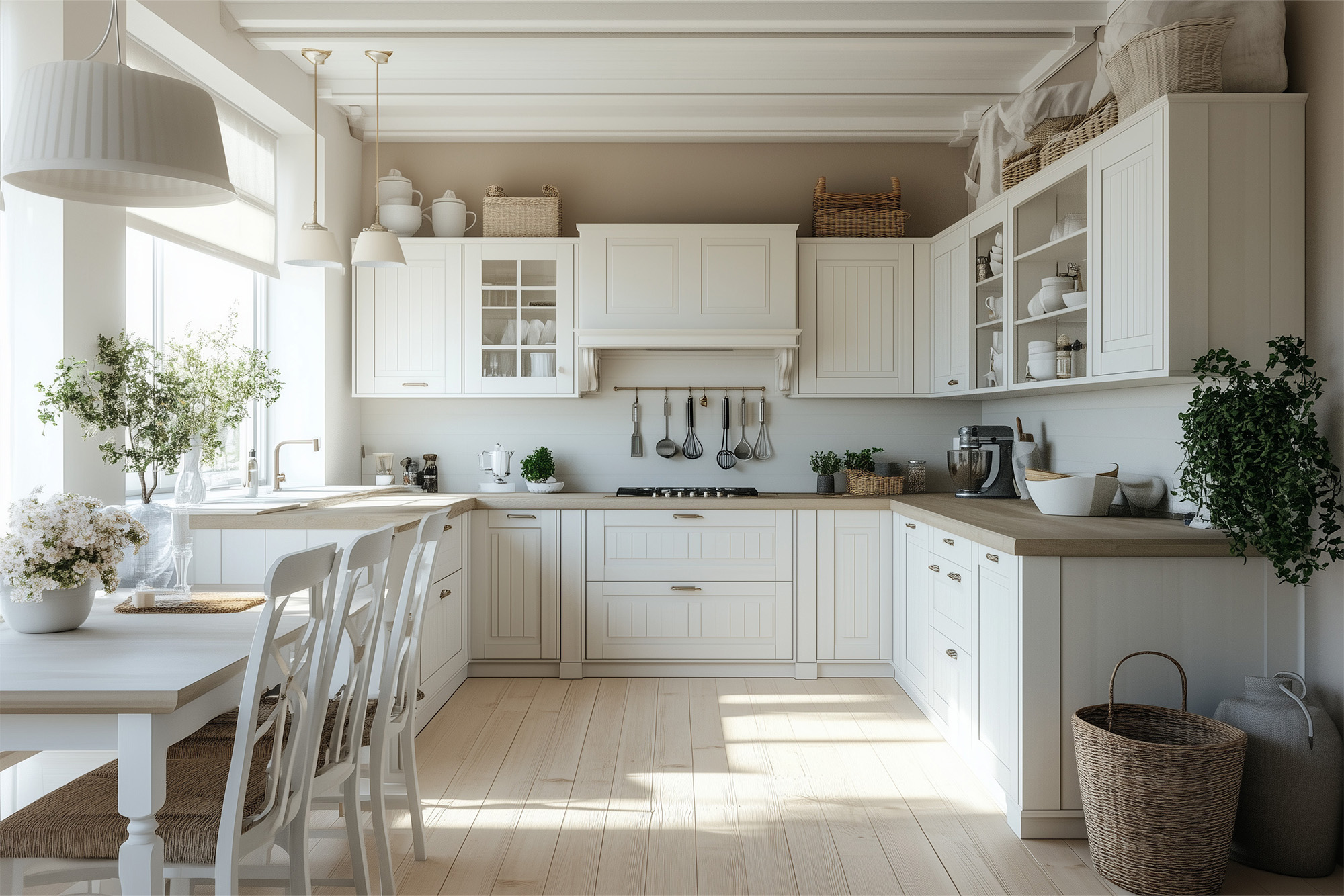
If you have ever stepped onto your kitchen floor barefoot on a January morning in Maine, you already know the problem. Tile does not just feel cold because the room is cold. It feels cold because of how it moves heat, and that is something you can actually design around when you choose your next floor.
Here is what is really happening, and which materials fix it without giving up the durability a working kitchen demands.
Why Tile Feels So Cold Underfoot
Ceramic and porcelain tile are dense, and dense materials are excellent thermal conductors. When your warm foot touches cold tile, the tile pulls heat away from your skin quickly and keeps pulling, because the slab behind it acts as a heat sink. Your brain reads that fast heat loss as cold, even when the tile is sitting at the same room temperature as everything else.
Wood, cork, and vinyl behave the opposite way. They conduct heat slowly, so they take very little warmth from your foot and the surface feels neutral or even soft. In a Maine kitchen, where the floor spends five months fighting cold air off the slab and exterior walls, that difference is something you feel every single day.
The Warmer Materials That Still Survive a Kitchen
Comfort is only half the decision. A kitchen floor takes spills, dropped pans, grit, and constant foot traffic, so warmth cannot come at the cost of toughness. Three materials give you both.
Cork is naturally warm, quiet, and forgiving on your back and knees. Look for a sealed, high-density cork with a quality wear layer so it stands up to chairs and pet claws. it's worth seeing how it compares in our cork vs rubber vs foam underlayment breakdown.
Engineered wood delivers real wood warmth with a stable core that handles Maine's humidity swings far better than solid plank. Veneer thickness and finish quality are what determine how long it lasts.
Luxury vinyl plank stays warm underfoot, shrugs off water, and now mimics white oak and hickory convincingly. A thicker wear layer is the spec that separates a floor that lasts from one that scuffs in a season.
Pairing Your Floor With How Your Home Heats
More homeowners across eastern Maine have switched to heat pumps, and many notice their floors feel cooler afterward because that radiant warmth from an old boiler is gone. The fix is partly material and partly system. Cork and LVP both feel warmer on their own, and any of these three pair beautifully with electric radiant mats if you want true heat underfoot in the zones where you stand most.
The team at Atlantic Designs can walk you through whether radiant makes sense for your layout or whether the right material alone solves the comfort problem. The answer usually depends on your subfloor, your heating setup, and how the kitchen connects to the rest of the house.
Photos cannot tell you how a floor feels underfoot, which is exactly the thing that matters here. Visit Atlantic Designs to stand on cork, engineered wood, and luxury vinyl side by side and compare them honestly. Our showroom serves Bangor, Ellsworth, Lincoln, Newport, and Camden, ME, and our designers will help you match warmth, durability, and style to your real kitchen.
Stop by Holden, ME or contact us today to start your project with flooring that feels as good as it looks.


